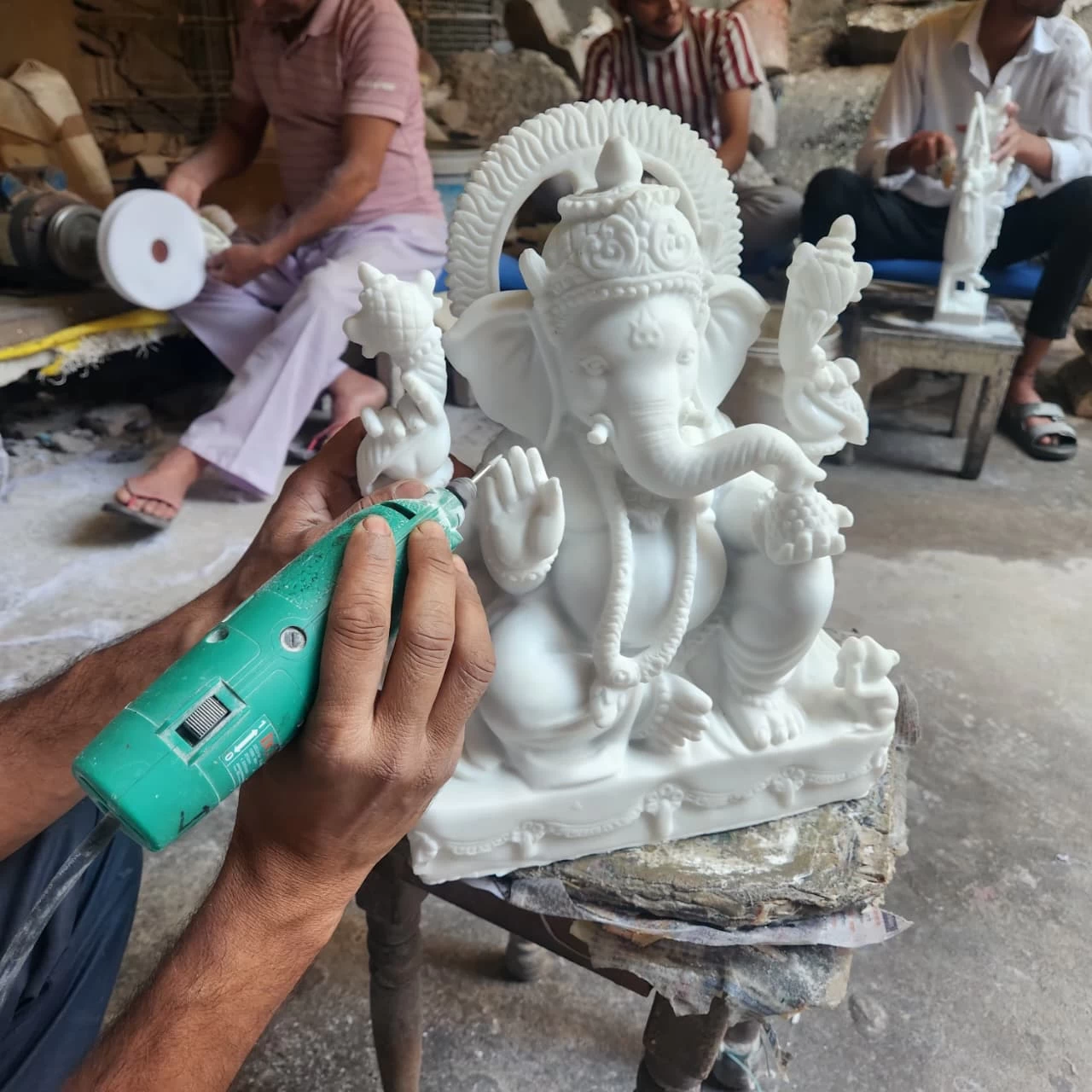
1. The Tool: Micro-Rotary Handpieces
Artisans use high-speed, handheld rotary tools equipped with various interchangeable heads. These tools allow for extreme maneuverability around delicate features like Lord Ganesha's trunk, the crown (Mukut), and the intricate jewelry.
(A).Diamond Bits: Used for sharpening lines and defining the separation between the limbs and the torso.
(B).Sanding Drums: Small cylindrical attachments that smooth out the inner curves of the ears or the folds of the dhoti.
(C).Pointed Burrs: Essential for detailing the eyes and the fine patterns on the base or halo (Prabhavali).
The Art of Polishing: Bringing Radiance to Divine Forms
The process of polishing a hand-carved statue involves moving from coarse textures to a silken smoothness. It requires patience, a steady hand, and an eye for detail.
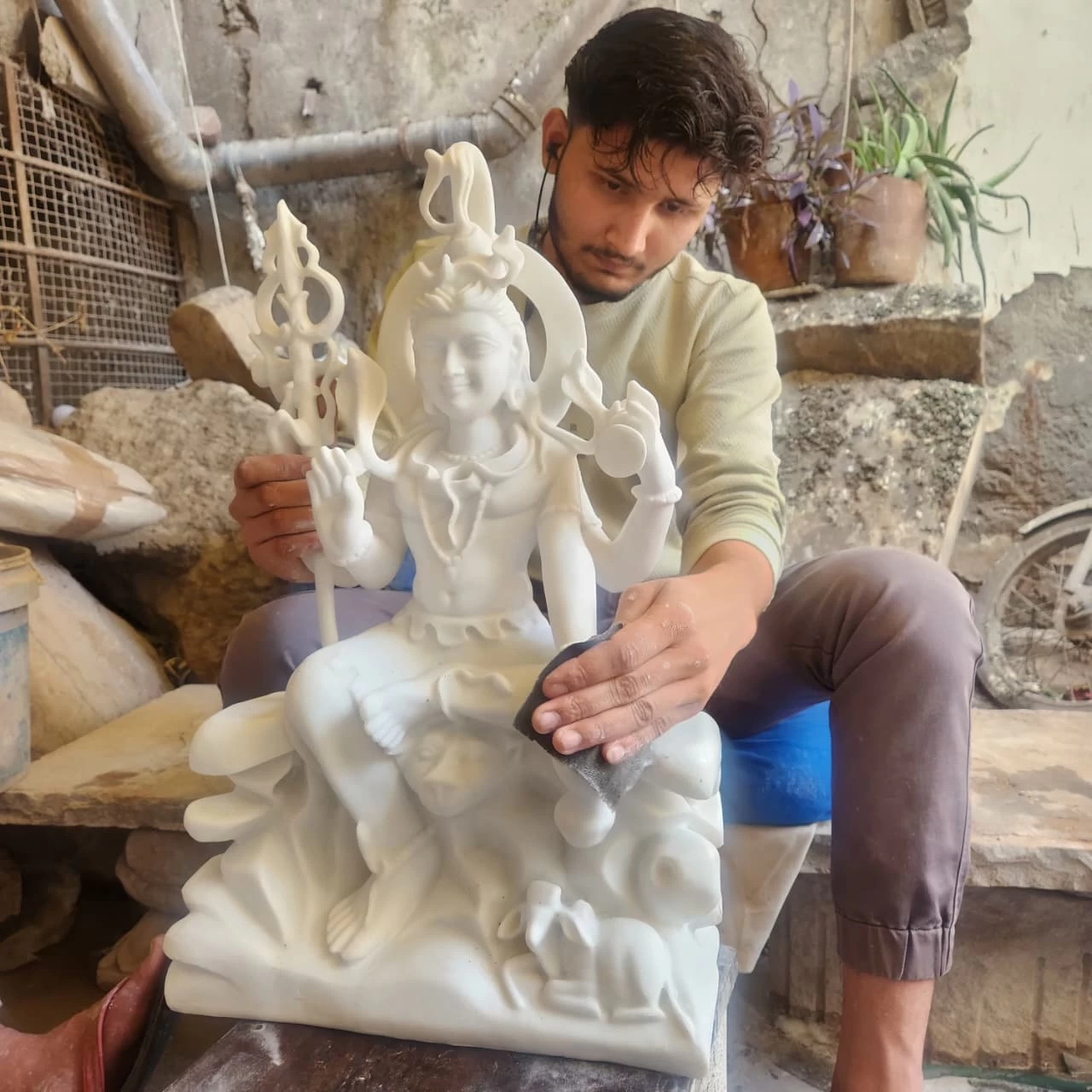
1. The Sanding Phase (Ghisai)
The journey begins with sandpaper. This stage removes the tool marks left by the chisels and levels the surface.
(A).Coarse Grit (80 to 120): Used initially to smooth out the rough edges and deep scratches from the carving process.
(B).Medium Grit (220 to 400): This is where the statue begins to feel smooth to the touch. It premares the stone for its final glow.
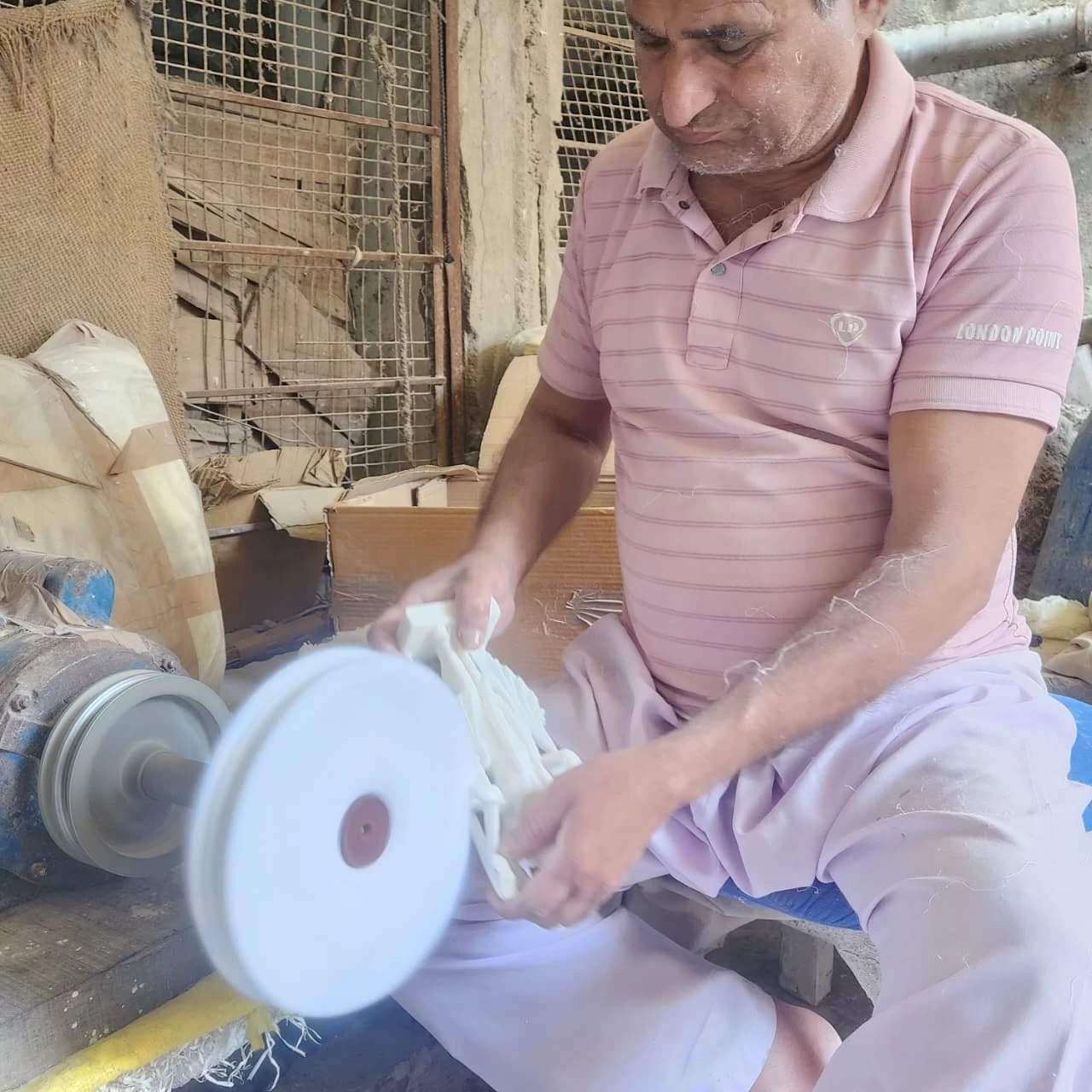
The process typically utilizes a bench polisher or a heavy-duty motor fitted with an extension spindle.
(A).Cutting Compounds: These are applied to the spinning wheel first to remove any microscopic scratches left by sandpaper.
(B).Finishing Lustre: A finer, softer compound (often white or light-colored for Staue) is used next. As the wheel spins, the heat generated by friction helps the compound bond with the stone's surface, creating a protective, glassy layer.
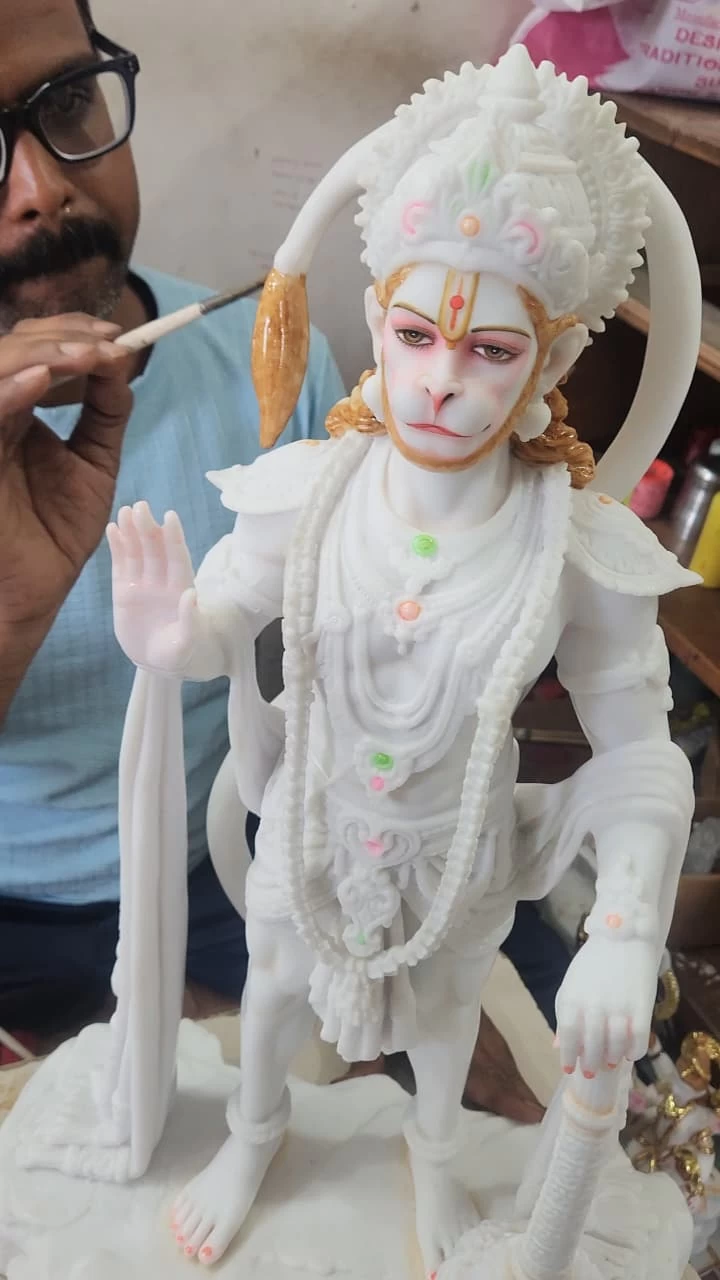
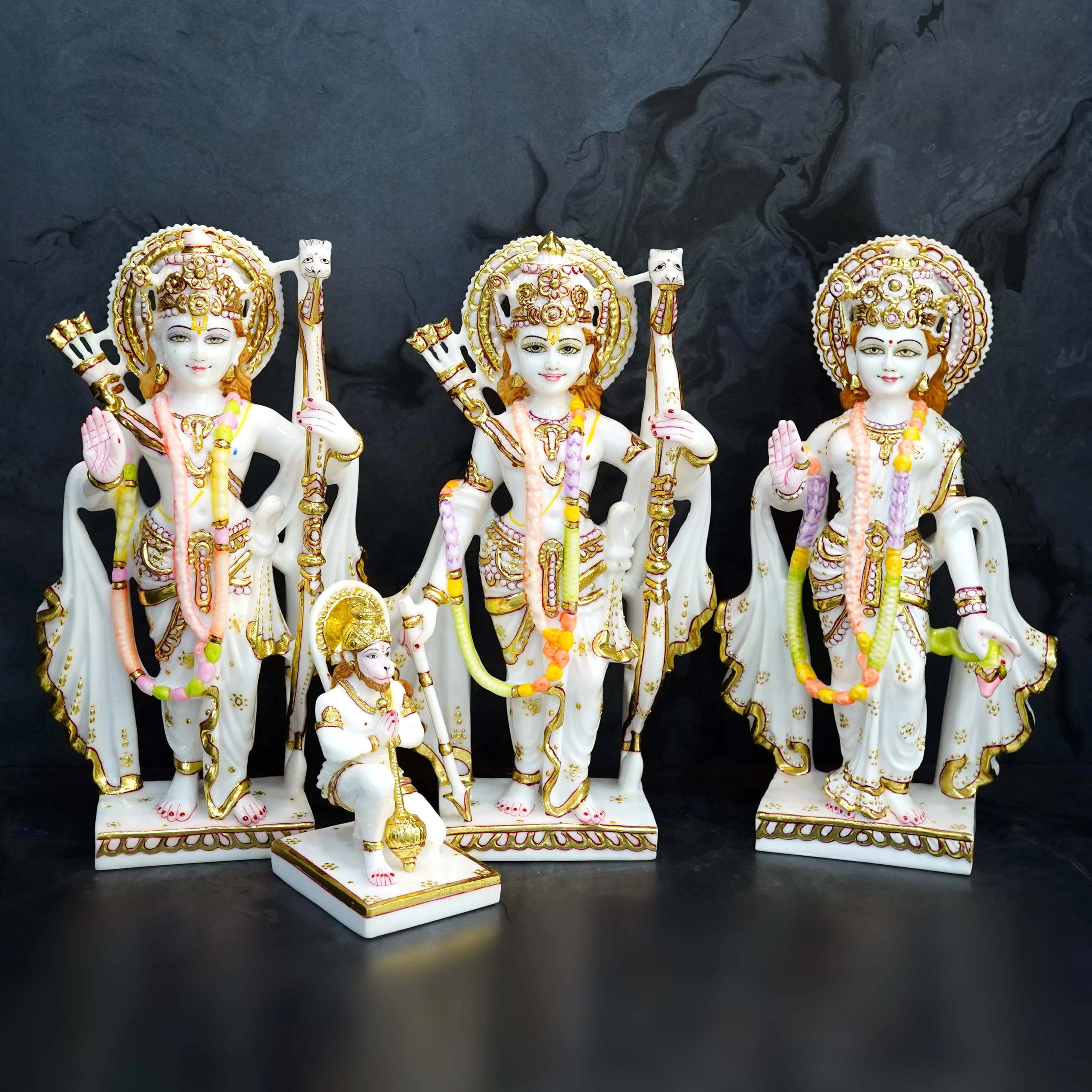
The painting process typically moves from the largest areas to the smallest details.
(A). Base Coats: The skin tones and primary garment colors are applied first. Modern artisans often prefer high-grade acrylics or oil-based paints for their durability and rich pigmentation
(B). Shading and Highlighting: To give the statue a three-dimensional appearance, artists use "wash" techniques for shadows in the folds of the clothing and "dry-brushing" for highlights on the crown and ornaments.
(C). The "Prana" (Eyes): The most significant moment in painting a god statue is the Netra Unmilana (opening of the eyes). This requires extreme precision, as the eyes are believed to be the window through which the deity gazes upon the devotee.
Daily Cleaning: Wipe gently with a dry or slightly damp microfiber cloth to remove dust.
Avoid Abrasives: Never use acidic cleaners (lemon juice, vinegar, or tamarind paste) or scouring pads, as they scratch the clear coat.
Pooja Liquids: Wipe off kumkum, turmeric, or oils promptly after daily worship to prevent long-term discoloration on painted areas.